December 13, 2017

Waiting, Starstruck and More Waiting

A full two months have passed since your first appointment at Southern California Food Allergy Institute - that appointment was incredible on so many levels. First off, meeting the team that we had waited two years to meet was finally here, I was starstruck when I first saw Dr. Randhawa walking around, I had to remind myself to breath, I mean this is the brain behind healing you!  

The clinic was not at all like I was expecting. 
Walking into the Clinic for the 1st time.
You were so happy, knowing that this day was finally here. We were the only patient in the waiting room. 

It was very understated and we were one of two patients the entire day. We talked with the team for four hours! They shared information with daddy and I that we had never heard of before, which was shocking because this would be the 21st doctor that you would see, what could this doctor possibly tell us that we haven't heard or learned through our own research? Well it was a lot. The team noticed we arrived with a binder filled with different tabs that detailed out your labs, reaction history, supplements, pictures, graph and trends, etc. They said, "a binder comes with a story." That's an understatement. Since the first day of life we have been fighting to attain optimum health for you. From jaundice and projectile vomiting to bleeding eczema and constipation and then excess mucous/constant congestion and random and severe allergic reactions to sensory processing disorder and GI issues. The list goes on and on and all of these do not come with a "look." From the outside, you look like a "normal" toddler. You are social, adventurous, funny, intelligent, witty, coordinated, persistent, a leader and very focused and driven.  Daddy I and are so excited to work with a team of doctors that can heal your insides so you can live like a normal toddler and focus on learning and playing without fear and sickness.  
You were very accepting of Dr. Randhawa -
a vast difference from your lack of openness with other doctors.
  
After your appointment, you were exhausted.
After talking with the doctors for hours, daddy and I felt mostly overwhelmed but a sense of hope, that you are in the hands of a team that will work to heal your body.  After having our minds blown by the team, next you had to endure many tests including allergy skin testing and loads of blood draws.  That same night, as we flew back to Maryland, we reveled in a feeling of hope so great, you could cry! That feeling was short-lived though, as you would have two more reactions just days after your consult appointment, and to seemingly safe foods. Daddy and I, again feel hopeless and thought, "what do we feed you?"; "how do we parent a child, we don't know how to care for?"; "will this get better?"; "will you have a reaction to this food today?" We immediately consulted Dr. Randhawa and he guided us into removing additional foods from your already very restricted diet.  Then we waited. 
Another random reaction came with itchhing and hives.
We managed it with emergency meds
and the reaction did not progress. 
Dr. Randhawa determines this reaction is to soy,
a food you have been eating for years.

It seems like we are always waiting with you, from being born at 42 weeks to waiting for lab results, doctors, referrals, etc., we have mastered the art of patience that one must have parenting and caring for you. After we received some of the lab results back, we were told you needed to have an endoscopy to rule in/out some GI disease. Next we searched and searched and finally found a GI that would do the procedure without putting you on meds for 8 weeks preceding the scope. Now we waited for your appointment. A few days before your appointment, you came down with pneumonia

At your ped, and your oxygen saturation was 93,
so you had to do your first ever breathing treatment.
A few more followed that day until your oxygen reached 96. 
Your first time ever needing antibiotics, which would require us to reschedule your scope procedure. MORE WAITING! I could scream or cry or both. The pneumonia was very scary, but you took to the antibiotics well and without any reaction. And now we waited for the rescheduled scope appointment...

July 21, 2017

"Picky Eating" Update - Week 23

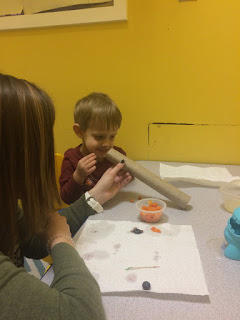
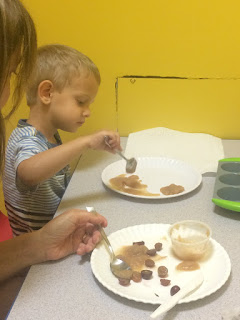
You have now been in OT for tactile defensiveness (sounds intense, right?!) regarding food for 23 weeks! We have been very consistent and go every Thursday for one hour. Each week the therapist, Miss Alex lets you play in the amazing gym for 10-15 minutes, which loosens your body up. Sometimes she has super fun obstacle courses that even I want to get in on. She has this special way of getting you excited about everything she has planned for you. You quickly become engaged and excited. After the physical play releases any anxiety that your 3 year-old body may be holding onto, you and Miss Alex head over to get down to business with the foods.  After 30-45 minutes of food therapy, you and Miss Alex come and share what you did for the session, which includes a summary of mood, willingness to engage, anxiety triggers, attempts at eating, etc. After each session I make a summary and while I must admit, progress seems very slow, the log I have created has really helped show all the progress made thus far.  So while you may not be full on gorging on lasagna and salad, you have come so far in 23 weeks.
The gym at the center is full of super fun equipment 

Feb 2017:Getting to know Miss Alex in the Gym
April 2017: Obstacle course time

This was my very first entry, summarizing your overall status currently:
"February 9, 2017 -  Jahan does not want new food in his space. He accepts approximately nine foods. If any foods other than his accepted foods are presented at the table he gets anxious and often shuts down, and does not eat at that meal and often that carries over to missing the next one to two meals. This results in hours of crying, depleted energy and impacts every family member at every meal. Jahan relies heavily on pouch baby food. Approx. two at each meal. Jahan will not fall asleep by himself in his bed. Will not use a blanket. He will not touch wet foods. He gets anxious if new people are around when he is eating and then has a meltdown that can last hours. He often skips meals, about 1 per day. He relies heavily on milk for caloric intake. He will not eat any fruit or vegetables. Jahan is constipated most days and goes three to four days between bowel movements.  He has many rules around food, including using only certain utensils, his seat, sitting in laps, eating outside, downstairs, etc., eating with certain plates, bowls, etc. He does enjoy helping prep food.  Jahan was always around 50% for height and weight, he has now fallen completely off both curves. This behavior began around 18 months old and before that you appeared completely comfortable with food."
Feb 2017:Playing with food - it took you two sessions to engage
Feb 2017: Playing with other "sensory" bins and toys helped get in the mood to play with foods

Wow - looking back at this, I realize how much you needed intervention. Of course I wish we would have started earlier, but honestly everyone would tell me this "picky eating" was normal toddler behavior and eventually you would eat. Most people do eventually eat, but not for kids with sensory disorders. They don't eat unless one of their accepted foods is presented without any anxiety surrounding it.  Therapy is giving us the tools to help you and you the tools to help yourself. It's teaching you how to cope with situations that may be uncomfortable and cause anxiety.

Fast forward 23 weeks:
May 2017: Playing with wet foods, but with a spoon
July 2017: Engaging with food and having fun doing it
"July 13, 2017 - Jahan is comfortable with food being in his space that is new including foods that he may not eat. He is learning about all types of foods. Helping cook when possible, picking fruits and veggies out at the farm and can now state most of the foods by name and there are a lot of them. Jahan is excited to help prep food and has tried mushrooms, corn, grapes, dried strawberry, dried banana, dried apple, pepperoni, chia seeds, prunes and mashed potatoes. Jahan is comfortable touching lots of wet foods now.  He has added grapes, corn and chia seeds in his diet regularly.  He engages with many foods now, despite not yet eating them.  His comfort around foods that formerly caused significant anxiety has drastically decreased.  His anxiety with new people being around while eats is gone. He no longer skips meals. His constipation is gone with the exception of a few days where it did come back. He has also started using a blanket to sleep. He is falling asleep in his own bed now on his own.  His rules around certain cups, bowls and utensils are gone. He does request the cup be full and the plate have a lot of food although he doesn't drink or eat it all. When he is anxious he puts a lot of rules in place. When this happens, there is no real intent of eating until the anxiety is put to rest by resetting his system with heavy work concepts.  He hardly eats baby food pouches.  He loves his yogurt, chocolate or vanilla. He now allows chocolate chips and chia seeds in his yogurt.  He is fully potty trained and has transitioned into preschool without issue or anxiety of any sort. Jahan has gained four pounds and is now 36.5" and is back on both curves."
June 2017: Happily despining wet green swiss chard

The progress made is incredible. Our family hardly feels anxiety around meal time like it used to. More often than not, meal time is a fun enjoyable experience.   I know this process and confronting these feeling head on is challenging, but you are far exceeding my expectations - we are so proud of you Jahan!

July 20, 2017

Why is Asthma So Feared By Food Allergic People

Five! You have had five reactions recently that have made me scratch my head, lose sleep and ultimately come to no conclusion as to how on earth these could have occurred. There was no food eaten within one to two hours of the reactions. The foods that were eaten I fed to you again after the reaction to ensure a new allergy did not develop or there was no cross-contamination. No reactions.

I continue to scratch my head and lose sleep. I have tried identifying patterns during these reactions. A few things come to mind. Majority occurred after exercise or when a big shift in temperature occurred.  But you exercise all day everyday and there are temperature shifts all the time. Hmm, well that is all I have come up with. Wait, there seems to be another pattern, the reactions have also occurred in spaces that are carpeted, four of which were not in our house. I have always correlated these reactions to trace amounts of allergens on hands that somehow ended up in your nose or mouth. Maybe it's something else. Maybe it's not.  After doing some digging - maybe it's asthma. Something in the environment you are allergic to and then it is set off by exercise or shifts in temperature.

And now, another reaction, this time, sudden and constant coughing and then wheezing. No vomiting this time. I give two puffs of the inhaler meds that Hopkins prescribed after discussing the recent reactions. The wheezing quickly subsides and the coughing slows. After 15 minutes the coughing dissipates. Could this be that these reactions that mimic food allergic reactions are actually asthma attacks?

ASTHMA - so scary as a parent of a child with many severe food allergies. Why though? Virtually ALL of the deaths that occur from food allergic reactions are in people that also have asthma.  And now we may be in the food allergic and asthmatic bucket.  Having asthma and controlling it either with functional medicine or conventional medicine is manageable and seemingly not that scary so long as you recognize symptoms and treat it.  When you layer on food allergies, it suddenly becomes something else.

So why are the people that have fatal food allergic reactions asthmatics? I can say every one of these five reactions mimics the beginning of food allergic reactions. Sneezing, coughing, wheezing, vomiting - that's how it all starts. So at that point in the reaction, if I guess it's airway distress due to asthma and give the inhaler, and I guessed wrong and we lose time, valuable precious time, that could be the difference between life and death. This is often the case for the fatal cases. The food allergic reaction was treated with asthma meds instead of epinephrine.

As your parent, I must learn everything I can about this in order to be able to quickly and effortlessly react in an instant. I must guess right every time. I must educate myself so I can educate others, most importantly you.  Jahan, as challenging as this journey is that we are on TOGETHER, I wouldn't change any of it.  While I do not enjoy seeing you in distress, I am thankful for the opportunities that all of this has brought to me. You are helping me learn so much, you have helped our family become so incredibly healthy, you have helped both daddy and I become much more understanding towards families with special needs. For all of this, we are thankful. 

June 15, 2017

Sensory Issues - The Low Down Dirty Truth

After a solid year of what I will refer to as extreme picky eating habits, you completely fell off of the growth charts for height and weight. You had always been around the 50th percentile and when you basically stopped growing due to restricting your food intake, I knew I had to take action. In January 2017, we had you evaluated by professionals to see what in the world was going on.  They watched you eat, well you didn't really eat, but they had enough information to conclude that you had some sensory issues surrounding food.  Finally, I had a diagnosis and we began to work up a plan to help you manage your issues and hopefully start eating, start eating  a variety of foods and most importantly have less anxiety around food.  Occupational therapy or OT weekly sessions began in February 2017.

Each week, I meet with your OT, Alex. I extract everything I can from her in order to help you at home. Over the past five months, I have learned so much from Alex about these sensory issues - first off, the technical term is called SPD - Sensory Processing Disorder. This neurological disorder causes the affected person to perceive the sensory information differently than a "normal" person thus resulting in abnormal responses by the affected person.  Experts estimate that approximately 15-20% of kids have this disorder.  "Gifted" children are often affected by SPD. The majority of kids with environmental and/or food allergies have SPD. It cannot be addressed with medicine. It does not go away, rather the affected person must learn to cope. Therapy, especially early on in life is ideal.  Boys and girls are impacted equally although 99% of the people going to the center we go to are BOYS! Boys apparently exhibit behaviors more externally, where as girls are more likely to internalize. Girls often go undiagnosed.

SPD is incredibly challenging to understand.  This is partially because there are so many senses and there are so many different ways they can be sensed. A child with SPD can be hypersensitive, undersensitive or seek senses or any combination of these  There are a lot of different outcomes, so a one size fits all just doesn't work. There are not just five senses like we are taught as children. There are eight sensory systems and then endless types of senses.  For example, every bite of food someone takes, requires 32 sensory processes to occur! If any of those senses are out of sync, there can be issues. If there are issues surrounding food, this could result in a child (or even adult) not eating "wet" food, fruits, vegetables, soft foods, hard foods, purees, colored foods, pasta, or any combination.  Kids with sensory issues that go untreated especially around foods often grow into teens and adults with issues that can result in low self-confidence, physiological issues, anxiety and the list goes on and on.   The key to get kids with sensory issues surrounding foods to eat more varieties of foods is to basically revert back to them being a baby. Let them play with it, touch it, talk about it, get comfortable with it. If the child won't touch the foods or play with them, they certainly won't eat them. It is a process.

This chart is helpful to identify behavior patterns that correlate to children with SPD


Kids with SPD that have food issues WILL NOT eventually eat, no matter how hungry they get. They must be given foods they are comfortable with.  Kids with SPD often have big issues with transitions and need significant advanced prep about change. Kids with SPD are not giving us a hard time, they are having a hard time.

Kids with SPD can appear to be completely "normal" and then BOOM! Something changes and there is a meltdown that lasts for hours, yes hours! It's unpredictable and often cannot be recreated. It makes identifying patterns in behaviors and inputs extra challenging - how on earth do you parent that?! LOTS OF LOVE is the only and best answer.  Oh and did I mention therapy!

If parents think their child(ren) may have minor, moderate or severe sensory issues, I encourage them to visit this amazing website and check out The Out-of-Sync Child.


March 20, 2017

Carageenan - What is that "Safe" Ingredient in Our Food that is "from Seaweed?"

As we have and continue to significantly improve your gut inflammation, I am slowly beginning to turn every stone, every ingredient, what are all of these strangely-named items listed in the ingredients that we eat? I know they are "safe" from an allergen perspective, but what the hell are they, really? I will start with Carageenan, long name, but easily pronounceable.

Often an ingredient in non-dairy alternatives and deli meats and labeled with "made from seaweed" - but why and what is the purpose? After doing some digging, Carageenan does come from a very specific red seaweed and is added to give the taste of "fat", thicken and stabilize - I don't want to get into the depths of the science pool here, but it's unique chemical structure triggers an immune response when ingested, which in turn causes inflammation, bloating, cramping, IBS, colitis,
eczema, leaky gut and seriously the goes on and on, over 100 inflammatory diseases are linked to Carageenan. Over time, inflammation has a damaging effect, in it's most severe form, it rears it's ugly head as cancer.

After a little more digging, this "safe and natural" substance has been used for sometime to induce gut inflammation in lab animals in order to test anti-inflammatory meds. And now food manufactures are adding this to milks, creams, yogurts, soups, cheese, meat, sauces, etc. etc. I see you Whole Foods and you too Trader Joes, you two are some of the worst culprits of this utterly GROSS practice.

The good news is there are alternatives to these foods that include this immune triggerer. A quick scan of the ingredients (start backwards, you're more focused in the beginning of a reading a food label) is very telling. The bad news, this one can be hidden in "natural flavors."  So we will simply do our best and utilize a great food buying guide if we buy processed foods.


March 1, 2017

Cheeri-OH NO!

Cheerios, that's a staple breakfast cereal you enjoy about twice a week, you love them! And I have always loved them because 1) they are safe for you to eat and 2) they are gluten free.  

The opened and unopened boxes have now been trashed and I WILL NEVER BUY AGAIN!

You may ask, what changed? Why such drastic measures mommy?  Well, listen up.

For about the last year, our team has been working hard to get your gut health and gut inflammation on track in order to curb the autoimmune impacts and prevent any further issues. The effort everyday that is required is pervasive. We have made several changes to the way our whole family lives. The biggest change is that we have become a gluten free house, which I do have to admit, I pride myself in, because I have become a rather savvy gluten-free baker.  Why gluten free though? It seems like this is just a wild trend sweeping the nation the past few years, but this is all for good reason, given that the increase of gluten-intolerance and the use of Round-up (herbicide) are highly correlated.

Well, very simply put, I was under the impression that wheat, malted barley and rye (all contain gluten) were doused in that nasty Round-up herbicide, which has been known to cause systemic issues over time to the body, despite Monsanto (the maker of Round-up) denying this fact.  Going gluten free significantly reduces the levels of this nasty chemical that over time WILL have negative impacts on everyone that consumes it. The science behind this is now more clear than ever.


So what's at stake here? In a new scathing report issued in February 2017, studies show the impacts of low levels of Round-up/glyphosate causing the following:

The report also lists the biggest offenders, the foods with the highest levels of the toxic chemical, which includes gluten free foods, such as Cheerios, Lucy's and Annies.  Cheerios though by far exceeds all of the other foods in levels of glyphosate.  So all this time, I though gluten free foods would protect us, they too are now laced.  

So what can we do? We are making great progress with your immune health and now this blow. 

The solution is actually simple - go organic. Organic foods are prohibited from being contaminated with herbicides like Round-up and pesticides alike, which will protect us from this incredibly harmful chemical. 


February 9, 2017

Picky Toddlers: What is "Normal" and What is Not?

For about the last 20 months you have been an incredibly picky eater. As a fresh one-year old, you were eating pomegranate and beets to mango and all beans.  You loved carrots and potatoes as well as those damn squeeze pouches, which you have coined as "sauce." I will talk more about those sauce pouches later, but for now, back to the real foods.  You have never been a messy eater, not even with your 1st birthday cupcake. You like your napkin close by and clean hands and face.  Now at two-and-a-half - you do not eat any vegetables or fruit, that's right none. You don't eat beans, foods with color, new foods are absolutely out of the question. Foods that once were a staple are now trashed after each meal. You currently eat about ten foods. Yes, only ten. You also become very overwhelmed and anxious with a fight/flight response when too much food or new food is presented. Other scenarios cause unprompted outbursts, landing all the food on the floor and you refusing to eat at least for that meal and often beyond.

So this is all "normal" right - I would often ask friends and family. All of them said yes, totally normal for a two-year old.  Similarly to how you would projectile vomit several feet your first year of life - friends and family also said that was normal, in case you are wondering, it is not.

Then in October 2016 we paid the doctor a visit - just a regular visit and learned that you fell off your weight curve and have not grown in height in a long-time. It was time to take action.  I did my research and found one center that I thought could help. A play-based feeding therapy clinic. I made your appointment - it was a 3-month wait.  Finally, the appointment came, two doctors assessed you while you played, ate and interacted.  The appointment ended and I waited for your assessment.

The report came, confirming my suspicions - your behavior and development with/to/around food was abnormal. I learned that there are 32 stages developmentally to eating. Not so good news is you are at stage two/three/four for all foods except the ten you tolerate. The good news is the doctors think they can help habilitate you with time and a focused effort.

We went for your first appointment in February 2017, you met Alex, you had fun and painted with applesauce. And so our journey begins, with the end in mind.

Playing with Alex at Feeding Therapy
Building rapport with Alex 

The point of this post is, when you think something is not "Normal" with your children, seek help and don't listen to other people just because they have had kids before. They haven't had your kid. Go with your gut.


December 6, 2016

Friends and Family - Your Guide to Food Allergies

With the holidays in full force that equates to food and parties and navigating to keep you safe!

It takes a village. I would love for others to be more understanding and less judgy - for example, I get lots of eye-rolls when I am incessant about hand washing, yes with soap and water pre-eating and post-eating, every meal and every snack. That includes others that probably ate/touched foods you are allergic to and then they touch you, play with you, share toys, phones, etc. Sadly, you have had a reaction simply from others not washing their hands properly after a meal.

At this point in the game, I DO NOT care what others think about the way I parent you. It is my duty to keep you safe, alive and thriving.  Although, it would be grand if others were more understanding. I did come across a nicely written piece that does define great pointers for grandparents, which carries over to family and friends. I encourage everyone that loves you Jahan, to read this.


  • If your grandchild has been diagnosed with food allergies, you must take this medical diagnosis very seriously. Even if he or she is one of the lucky ones who will eventually outgrow the allergy, it is crucial that you err on the side of caution.

    Leading pediatric allergist Dr. Robert Wood of Johns Hopkins explained that “One of the most common causes of reactions in allergic children is related to food being provided by the grandparents who never really understood or believed the notion that their grandchild had this severe food allergy.” 

    The good news is that studies have shown that when caregivers are trained in avoiding, recognizing and treating allergic reactions, the frequency and severity of these reactions decreases.   The following tips can help you to ease the burden on your loved ones and will enable you to become a more reliable caregiver.

    1.    Abide by their rules—even if you don’t understand them.  Since the day their child was diagnosed, your son or daughter has been learning a new way of life with severe food allergies. There are a lot of ambiguities and there is a lot of stress.  Assume that the parents know best.  You won’t get a chance for a “do-over” if your grandchild has a reaction.

    2.    Doctor’s orders  Let your grandchild’s physician handle his or her medical care.  Allergy parents are bombarded with hokey tips and media stories of treatments and cures involving everything from worms, to herbs, to acupuncture.  Some of this research is very promising but for now, assume your grandchild is in good hands with his current physician.                     
    3.    Engage but don’t overstep. I read once that grandparents are like pinch hitters. They need to sit on the bench until they’re called up. Allergy parents (especially after a recent reaction or diagnosis) often have a lot of anxiety over their child’s condition.  If you are asked and are able to help, fantastic. But unless you truly believe your grandchild is in danger, don’t suggest alternative ways of managing allergies.

    4.     Pick your battles!  Holidays are one of the most challenging times for allergy families. Prioritize. What is the most important thing about the holidays? As Suze Orman says “People first.”  Yes, you want to make your traditional nut braid and thumb print cookies, but believe me, you can have a festive and loving holiday without cookies, candy, mashed potatoes, even pumpkin pie. But you can’t have a glorious family holiday if one family is missing. So think and think again about what’s most important.

    5.    Phone Home Ask an allergy mom where the phone is when she takes a shower, and 99% of them will tell you that it’s right outside the shower door. Most of us have gotten that call about an allergic reaction at one time or another. And when we’re leaving our child with a caregiver, our fingers have a mind of their own and we need to make that call to check in.  So when you are caring for your grandchildren, keep your phone within reach at all times.

  • 6.    Serve it our way.  You may have a swell idea about how to reheat little Johnny’s dinner but you did not realize that they spray you just put in the pan contained dairy.  You saw Alicia eating strawberry sorbet last month. You didn’t realize that the brand you purchased is processed on lines with butter pecan ice cream. Daniel’s noodles tasted so bland, you thought you’d add a little seasoning, not realizing that it contains wheat. Well-meaning people who are not accustomed to living with food allergies can easily make a dangerous mistake and put a child at risk. Hidden ingredients and cross-contamination have caused serious, even fatal reactions. Do yourself a favor, and serve your grandchild only the foods that his parents have approved and serve them in exactly the way they’ve asked.

    7.    Emotions count  You may find yourself thinking that your son or daughter is going overboard with precautions or restrictions. Perhaps you believe that they could safely attend a family picnic, vacation or wedding. You may be right. But consider the family’s emotional heath and stress level, especially if the child was recently diagnosed. Sometimes the anxiety level in the home is so high, that it is just not worth all of the preparations and worry about an event.  Sometimes it’s better to decline a stressful invitation and keep the family safe and calm at home.  The emotional well-being of the family members is as important as their physical health.

    8.    Get support for yourself   Recently, my mother explained that a good friend of hers was a tremendous support to her after my son was diagnosed. I’m embarrassed to admit that I actually thought “Why would you need support?”  And then the light bulb went off and I realized that my mother, my son’s grandmother, had also gone through the myriad of emotions that follows a scary diagnosis. Once you really grasp the severity of this life-changing medical condition, it can be overwhelming. So if you find yourself feeling  sad, or scared or grieving about your grandchild’s condition, get the help and support that you need from friends, your spouse or a mental health professional. 

    These tips are not a substitute for learning about food allergies, and how to avoid, recognize and treat an allergic reaction. However, if you show the willingness to become an informed caregiver, you will go a long way in alleviating the stress and allowing your son or daughter some much needed time off duty. Your concern will nurture and strengthen your relationship with the entire family. Isn’t that what grandparenting is all about?

One more point I would like to make - 1) Do not pity Jahan - you are not a victim. You were made this way. Mommy and daddy are moving mountains to unravel and "fix" your immune system.  We will celebrate the holidays in the coming years without food allergies. Maybe not this year, but soon.

November 18, 2016

Going Out to Eat with Food Allergies

Spontaneity goes out the window when you are allergic to foods.  So what does it take to go out to dinner or any meal when you have strict diet? Not much, frankly. But planning and calling ahead is key. Most people do not understand allergies, so a little explaining goes a long way.

Jahan, in your second year of life you have now decided to actually try pizza and you decided that you like it, (imagine that), well love it, we are venturing out to a local pizza spot. Taking a one and two year old out to dinner is a whole other adventure, but we are doing that too.

So what does it take?  So first off,  I found a restaurant that is "allergy-friendly" - they understand allergies (sort of) and offer items that are friendly, usually gluten-free (GF) and/or exclude the top 8 allergens (wheat, soy, eggs, dairy, nuts, peanuts, fish and shellfish).  Next, I call them during non-peak times. 2pm is a good time. I ask for the manager. I explain your allergies, what I would like for you to eat and ask for them to read the ingredients to me off every single item you will be consuming or offered.  After ensuring all ingredients will be safe, then comes the risk of cross-contamination. That means that other items that may have touched items you are allergic to then comes in contact with your food. For example, a spoon. Or butter that a utensil went into that previously touched wheat for example. None of that can happen - big no no, since we already know you have reacted this way.  Okay, so by now, the manager is either completely freaked out and tells me he/she cannot guarantee safety OR the manager is willing to accommodate and guaranteeing safety.  We like safety. Anything other than 100% is no go for us.   If safety is guaranteed, I tell the manager my name, when we are coming and that's it. Then when we arrive at the restaurant, I ask for the manager and all communications and expectations are set. I literally do this for EVERY SINGLE RESTAURANT. EVERY TIME. EVERY TIME WE TRAVEL. We have to live and venture out and explore the world. We will NOT put you in a bubble, so we take risks. We mitigate these risks as best we can, the only way we know how.

Cheers to pizza...and hopefully wine for mommy!

November 14, 2016

"How Do You Do It?"

Friends often ask me, "How do you do it?" Before I can answer, they often answer their own question, "I don't know how you do it."  I honestly don't know how I do it. What even is "it"...it's a lot.

Having a child with a chronic health issue is the most challenging thing I have ever gone thru and continue to go thru. Every day. Every party. Every play date. Every meal. Every label. Every bite. Every single damn ingredient. I would be lying if I said it's easy. It's incredibly challenging to be that parent.

You see Jahan, all I want for you is normalcy. I try so hard every day to fight for that. In your school, your classroom, with your friends, your family, at the table, at the restaurant.  I yearn for this for my baby.  We DO NOT believe in wrapping you in a little bubble, requesting food bans, which would impact so many others. Accomplishing this means, you are around foods so close in proximity to you, that it could do serious harm, as we have seen.  As your parent, I am trying to keep you safe, that means I feel the burden, the stress, the what-if.  Trying to educate others, I am often viewed as overbearing, overreacting, a helicopter mom and the list goes on, mostly negative. It is a hard journey.  Co-parenting is equally challenging.  Daddy and I will continue to be diligent in maintaining your safety and also your quality or life, including relationships and experiences.  Then there will be new challenges that OIT will bring. Many in fact. For starters:

  • Will we all relocate to California? The thought of separating you from Emrys breaks my heart.
  • Will we stay in Maryland and travel back and forth to California every few weeks for the duration of the treatment that takes years?
  • Will you be successful with this treatment plan? Will we be successful?
  • How will we manage your schooling while in treatment?
The list goes on and on. I don't know what we will do or how we will do it, but we will do it and you will ride off into the sunset, free from these shackles. 


October 24, 2016

The Cost of Allergies - Uncle Sam Give Me a Break!

As your mom - I manage most of your health and so I know how expensive all this can be and those costs can add up really quickly, and we have reasonable health insurance. 

From the steep $600+ for an Epi-pen to thousands of dollars each month on food suitable for your long list of allergies and doctor appointment visits to ambulance rides and hospital stays. The costs are high and climbing.  Since I am a CPA, I often get questioned on taxes and credits, etc. The short answer is, I have no idea about taxes! Well I know enough to be dangerous and hold a conversation at a cocktail party. But this got me thinking, are any of the costs related to your allergies deductible?

I did some digging and the answer is Yes! And no.


First, what can we deduct:
  • Co-pays
  • Transportation costs, including mileage, using the standard mileage rate
  • Parking 
  • Overnight stays
  • FOOD!

Yes, you read that right. The costs of special food can be deductible. The food must meet certain criteria. Those criteria include:
  • The food must not be used to satisfy normal nutritional needs;
  • The food must alleviate or treat an illness; and
  • The need for the food must be substantiated by a physician

Keep records to substantiate the claims. The expenses may be subject to phase outs, eligibility requirements and other limitations and we can only deduct those expenses which exceed 10% of our adjusted gross income (AGI).

What you cannot deduct:
  • OTC medicines, even if doctor recommended, example: Motrin
  • Non-prescription based personal care products, example: oatmeal bath, creams
The big take-away here is to track all of our expenses all year and if we meet the 10% floor of our AGI, we can start deducting. 

October 19, 2016

Raisins are the New Candy!

Another trip in the books. This time we went to Seattle for a family wedding. We stayed with Grandma and Grandpa Perry. These sorts of trips where we are staying with someone and have a kitchen on hand are super easy for us to make your food and ensure you are safe. This makes planning really easy.  Except when you have a reaction, which you did.

You and Greyson enjoying juice
It was Friday night and chili and cornbread was on the menu. Cornbread, made of corn right - not so fast, there is in fact wheat in many versions, not all though.  You and your cousin Greyson, who is about six months older than you were eating. He had cornbread and you did not. He even washed his hands. Then you two went about playing like you have known each other for years! Then as I am eating, Daddy was bathing Emrys, I hear that cough you have when you have a reaction. That dreadful, sudden iconic cough. I stop eating and sit by you and watch. I don't think anyone noticed at this point what I was doing. I certainly don't want to draw attention to something if it is nothing because I think many people that don't deal with food allergies are on edge or they think I am over the top and making the situation more intense than they think it needs to be.  Anyway, you did stop coughing after a few minutes, so I went back to eating.   Everyone, including Greyson goes home. You get your bath and then your coveted milk. And then I saw it on your face, projectile vomit. At this point I knew you had come into contact with something, likely wheat, since that was the only thing prepared that you are allergic to.

I clean up the stinky mess with Grandma's help while Daddy bathes you again, much to your displeasure. You already bathed, why again!? Daddy and I watch you for about an hour and nothing else happened. I know you didn't eat any wheat, but came into contact with a very very small amount. You are very sensitive now, which means we all have to be incredibly careful about wheat.

Sharing raisins with Great Grandpa
Fast forward a few days, to the wedding. I cooked your dinner before we went and ensured I had endless amounts of food for you. During the cocktail hour, you noshed on your safe snacks, sharing some with your Great Grandpa Perry all while Emrys was able to eat freely on the sesame chicken, bruschetta and whatever else Auntie Chantel wanted to feed him.  What a feeling to not have to worry. I long for this day for our family. The fear and anxiety is real and it's every damn day, every damn meal, every event, every party, everything. But we still live, fly on airplanes, go on vacation, have dinner dates, attend play dates, laugh, smile and eat.  We will not let food allergies control us, we control them.


October 4, 2016

Knocking on Death's Door: Anaphylaxis

With you having your first full blown allergic reaction requiring medical intervention to derail the possibly life-threatening symptoms, I am hearing the same questions from friends and family,

  • What was it like?
  • Did Jahan swell up like Will Smith in Hitch?
  • Was he gasping for air?
  • Did it happen after one bite? 
  • How fast did it happen?
  • How did you know you needed to use the Epi-pen?
I want to address all of these. 

I had a conversation with your daddy on Sunday night that took me well past my 10:30pm bedtime when I asked him if he thought your reaction to a mere 281 milligrams of wheat was a wake-up call to him, would he have used the Epi-pen had I not been there? Would he have called 911, gone to the hospital, etc. etc. Daddy did not correlate the symptoms that your were having with having a severe allergic reaction. He didn't want to use the medicine and DID NOT want to go to the hospital.  Scary right? But why didn't he recognize the symptoms, why no Epi? Why skip the hospital? 

Your first symptoms included coughing, nothing crazy, but an obvious sign that there was something going on in your airway. That progressed to you vomiting, which is a great thing.   30 minutes went by and coughing began again, heavier, more frequent. Then itching, then throat itching. This is when I knew we had to intervene. There were clear signs of a systemic response and airway distress. Daddy did not agree with me. I pushed, we called and gave you the Epi-pen. Your symptoms stopped almost instantaneously. Wow - it was that fast. 

Daddy, like many people, including myself, thought that the reaction that would require medical intervention would be really fast, like in the movies, and it certainly can be, but it doesn't have to be. Daddy thought you would swell up, be gasping for air and turning blue. None of that happened, it could have, but it didn't get to that point. The reaction was slow, 45 minutes after ingestion to Epi-pen. Daddy also thought that the Epi-pen administration meant, we are in the clear, that's your parachute to safety, well sort of, but not entirely.  The epinephrine, which is the medicine in the Epi-pen, without getting too technical, helps to stop anaphylactic shock.  The medicine works almost immediately and then can wear off after 20 minutes or so and the reaction can persist. That is exactly what happened to you my love. When you got into the ambulance, about 20 minutes after you were given the Epi-pen, smack dab in your left thigh, the reaction began again. Head to toe hives, huge and small, red and clear. All. Over. YOU.
One of the hives - after Epi, Benadryl, Pepcid and Steroid. The size of my palm

Recovering in the hospital, scared, latching onto daddy
Daddy, like many, thought the hospital was more of a burden then a necessity, that was until he saw the post-Epi reaction begin.  The hospital would monitor your vitals, provide additional medicine (epinephrine, steroids, pepcid) to derail any further reactions. 

Anaphylactic shock can present itself in many ways, but a few take-aways for us, our family and friends:
  • Allergies are no joke
  • When giving new foods, pay attention for up to four hours for a reaction
  • DO NOT WAIT - give the epinephrine before blue, swollen shut and knocking at death's door
  • Go to the hospital post Epi
  • Every reaction is different than the next and previous
Angel, recovering, you are so resilient Jahan

September 30, 2016

TGIF! We're in the Hospital


Some lessons tonight. You are NOT ready for wheat. We can confidently administer your meds. Epi-pen is worth every damn cent they charge. 
Here's our update on our at home wheat challenge: You failed. miserably.  Coughing occurred 15 minutes after ingesting three mini pretzels. Then a vomit. We thought that would be it. It wasn't. Coughing continued which can be indicative of an itchy throat, throat closing, swelling, etc. I got Hopkins on the phone, they said the reaction appears local, give Benadryl. We did. Coughing subsides. 30 minutes pass and I am watching you like a hawk.  You begin itching all over. Itching your throat. This is not good. Now a systemic response and it's moving around. I call 911 and tell daddy to get you on the ground flat. I grab the $600 Epi-pen and swing it into your left leg. You are not crying...yet.  A few seconds pass and I realize I had to stab you my son, I did it. Whew. You begin wailing and I know the needle went in. EMTs arrive and off we go to the hospital. On the way you had a third reaction. Giant hives head to toe. We are at the hospital and safe. You, my baby boy, are iv'd up and feeling better now. You are chatting about the fire truck and ambulance, typical for a two-year old.


September 19, 2016

A Feat with Wheat is on the Menu

It's the cocktail hour prior to our cousin's wedding. Many of the cousins traveled from all over the states to be together and here we are at the big shebang in Chicago! All are dressed like they're at the Oscars, and not just attending, but actually receiving an Oscar, Angelina Jolie style. And all the cousins have been practicing for some time, to surprise the bride and groom with an Indian flash mob dance! So exciting, but yet we were all pretty nervous. We had some time though, and cocktail hour was sure to relax the mood.

You at the cocktail hour, loving that wheat pouch
Not so fast though.  I turn to you and  you are eating a baby food pouch, you love them, they are virtually baby-crack, but more healthy than that.

I look at the pouch as you suck every last drop out and my heart sank, panic set in.  The picture on the front has a grain on it, I grab the now empty pouch from you and turn it around to read the label. I briefly scan the ingredient list and boom, there it is, "Kamut (wheat)" - oh my goodness. How did I miss this?? I have never messed up before. I immediately grab daddy and tell him what happen. We decide to administer Benadryl before anything happens hoping to ward off any reaction.  You gladly take your "vitamin" - and then I go over to a little corner with you in my arms and cry. I deserve the worst mom-award of 2016! I feel terrible. How could I mess up when there is zero margin for error. Many cousins, some of which are doctors come and find me and give me some pointers to watch out for. Benadryl is kicking in and making you really sleepy, which it has never done before. It usually gives you a boost of energy. Now my little party-loving, dancing baby boy is passed out in your stroller and will at best miss the reception we have all been waiting for. The reception starts, dancing performances are on. I am watching your chest go up and down in a steady rhythm. This goes on for an hour. I feel terrible still. Our flash mob happens and the rest of reception goes on. I know everyone had the most amazing time at this beautiful celebration, but I screwed up. I did not enjoy these hours at the reception,  hoping and praying, watching you like an eagle scouting it's prey, that nothing would happen.
Sleeping in your stroller while the reception goes on
The reception ended, I took ouy up to our hotel and you slept, and I continued to watch. Nothing ever happened, which makes the allergy journey all the more confusing. Your iGe for wheat has hovered in the 30s and 40s, it's your highest allergen. But then nothing happened.

On mommy's shoulders at the Baraat, waiting for the groom
You and Daddy 

Fast forward a few months and an allergy appointment later and I get a call on Monday morning September 19th 2016, it's Hopkins.  The doctor tells me that they have researched the pouch and despite your high iGe numbers for wheat, they want us to try a wheat challenge at home. I am....over the moon, elated and scared.  Doctor gives me the protocol for the wheat challenge and tells me that had you not had that accidental exposure in April, we would likely not be challenging you. We would still be strictly avoiding.  So maybe I get a pass on this one, maybe I am not the worst mother of 2016.  Here we go...stay tuned for results!

September 9, 2016

Cuckoo for Coconut

So about two weeks ago, your allergist called with the annual update and surprised us with good, but scary news. Your coconut number is likely a false positive and to proceed with trying at home.

Wow - ok, daddy and I thought. It is one thing to talk about foods getting added to our "safe" list, but to actually go through the process of adding them requires quite the courage.  We actually have to feed these once taboo foods to you and hope and pray nothing happens all while being fully ready and capable to address any reaction, which has happened in the past very quickly.

Saturday morning now, a full 24 hours since Dr. Wood's scribe called - I went out and bought the coconut water and milk and was committed to feeding it to you my baby boy.  I got home and I pushed to start. Daddy was more reluctant.  He usually is with this sort of thing.  I put some coconut water in a Tylenol-like syringe and told you it was a vitamin, which you are all too familiar with and ironically gladly ingests.  Daddy and I wait. We wait a total of about five minutes, which is usually enough time for you to react. Nothing happens.  It's real now. After four hours, nothing happened. This is what it feels like - it feels about as good as that coconut water tasted. Ecstasy. Exhilaration. Freedom. You are clear to eat coconut in all forms!! This is a cause for a celebration - which I have been doing for about the past week.  I have been celebrating by buying and cooking all things coconut! Oil, water, milk, coconuts, oh my!


I thought I would share a few of my favorites from this week's meal plan - hope you enjoy as much as we did!

September 2, 2016

Ready, Set, Go Peanuts for the Baby!

Over the past decade, the prevalence of peanut allergies has exponentially increased.  For parents, children, families, physicians and teachers, there is significant frustration because the reason for this is still unknown.  There are many theories however, but nothing that is overwhelmingly responsible.  I will table this topic for another day. Back to the actual allergy to, rather than the cause - with this increase, peanuts are getting a lot of attention in the food allergy community and with that comes a lot of studies using them. One in particular, is known as the LEAP (Learning Early About Peanut) study. The study parameters, subjects and results were released in Q1 of 2015.


WHO: The subjects were infants (less than one year old) that were considered high-risk. High-risk equated to the infant having severe eczema (as described by the parent(s)), having a confirmed egg allergy or both.

WHAT: Some subjects will strictly avoid peanut protein until 60 months of age. The other group will receive peanut protein, regularly in their diet, multiple times per week until the age of 60 months.

ADDITIONAL INFO: Subjects were further stratified by sensitivity to peanut evidenced by a skin-prick test. Subjects experiencing a severe reaction to peanut at this point were dismissed from the study since they would likely be unable to consume the weekly requirement of peanut protein.

CONCLUSION: The results were remarkable. High-risk (eczema and/or egg allergic) infants showing mild sensitivity to peanuts or no sensitivity to peanuts via a skin-prick test that regularly ingested peanut protein until 60 months of age had a dramatically lower chance of developing an allergy to peanut when compared to the strict avoidance group.  There small window of opportunity to potentially change the infants sensitivity to peanut protein.

Ultimately what this study illustrated went against the American Academy of Pediatrics' (AAP) recommendation to delay peanuts.  The AAP has since revised their stance on the introduction of peanuts in high-risk infants.

In summary, at the earliest signs of eczema and/or egg allergy, an infant should be tested for a peanut allergy. If negative, introduce peanut products and have infant/child regularly consume following the LEAP protocol of at least two grams three times per week indefinitely.  If positive, complete the initial introduction of peanuts under medical supervision.


August 30, 2016

Pregnant? What Your OB is NOT Telling You

You're tired. You're hungry. You're nauseous. You're late.

You're pregnant! Congratulations! Babies are the world's greatest gift and they provide endless joy and challenges. What happens when those challenges are health related and could have been prevented or been less extensive?  Well, from experience, it sucks and you then work to restore the baby's health.

When pregnant with Jahan, I followed the advice of my OB, she was board certified and it was her fiduciary duty to guide me to optimal fetal health. She prescribed me prenatals that were rather pricey, $100 for a month supply, and didn't provide any other recommendations. I would visit her monthly until I was 36 weeks along and then I visited her weekly until my son was born.

There was no other guidance from my OB, so I opted to do my own research.  Some things I learned included:

So shoot for a vaginal delivery and breastfeed the baby - easy enough. 


Once Jahan arrived and started showing baby eczema, we learned a lot of other things that we could have done while pregnant to ensure the highest immune system possible. My OB never shared these tips. Perhaps she didn't know. Maybe a new protocol could be to see a pediatrician or immunologist at week 20 of pregnancy. There has got to be a way to ensure pregnant mothers receive all information that may impact their baby. Some things to consider while pregnant:
  • Avoid antibiotics while pregnant and get Group B Strep tested closer to delivery instead of at 35-37 weeks
  • While pregnant, supplement with prebiotics and probiotics
  • Ensure you are getting adequate Vitamin D
  • Limit sugar intake while pregnant
  • If a c-section is required, inoculate the baby with mom's vaginal flora immediately following the c-section delivery 
When pregnant with my second child, Emrys, I applied all of the above and he has had no immune system issues. His microbiome is flourishing.  He has had none of the complications Jahan has had and we also expose him to germs and dirt! 

August 28, 2016

That Dreaded Call

It's been a week. A week since your  last blood draw, probing for the latest and greatest, ok maybe not the greatest.

This is pretty standard protocol for someone with food allergies. Test the patient annually for new trends in the numbers, expose new allergies and sometimes, but not all that common, drop some allergens off the list.

This call for us has only ever been bad news. Actually all results from any doctor you have seen has always been bad news. More allergens should be added to the list. Avoid more foods. Your immune system is working on overdrive all day every day.  It's exhausting and temporarily depressing.

Daddy and I are curious where your numbers are now that you are two and your immune system is more mature and has been getting massive boosts from Dr. Wong's supplement protocol.

It's now been a week and a half. Friday morning, the phone rings and I know it is Hopkins because there is no caller ID. I answer, it's the doctor's scribe. The scribe takes all the notes and makes all the calls. She is also an MD.

She starts with, "La-Tasha, there are a lot of numbers, where shall we start?"

My heart is pounding, I'm thinking, "shit, what now?"

The scribe proceeds by asking if I have been giving you seeds like they suggested. Chia seeds, flax seeds, pumpkin seeds, etc.  No, I have not because I am SCARED! I am scared to give you anything new. When we give new foods, it must be on a weekend about midday. That way if you react, we are home and awake and can manage. She tells me I have to try the seeds, today. Once you have tried all of those seeds, try sunflower because that number came back low. Woohoo, small win there since we thought sunflower could be a new allergen. Now we have homework.

Then she tells me that coconut came back very low and there is likely no allergy anymore. We have been avoiding coconut like the plague for a long time. I am beside myself with glee, just imagining the possibilities with adding a new food. Coconut milk, and water and oil and yogurt and ice cream!  She tells me to try it at home and the medical team is confident you will tolerate it with no reaction!  More homework.


Next she tells me, you will need to come in within the next year, to Hopkins to challenge peanut! Your numbers are so low and following overall decreases to most allergens and because of risk of anaphylaxis they will feed you peanuts in the hospital setting while monitored and under the doctor's care.  The good news keeps coming - This. Is. Unreal.

We chatted for a few more minutes and concluded the call with a summary. Your numbers are decreasing for many items, but he is still highly allergic. Seeing overall reductions in a two-year old is a trend that points to a high likelihood of outgrowing many of these allergens.

I hang up and just sit there.  That dreaded call wasn't. It was delightful.  A flood of emotions continue with all this amazing news.  This is the first time that I feel real hope that you will be ok. We will get thru this.

Now it's time to try our new foods! Coconut, we are coming for you!